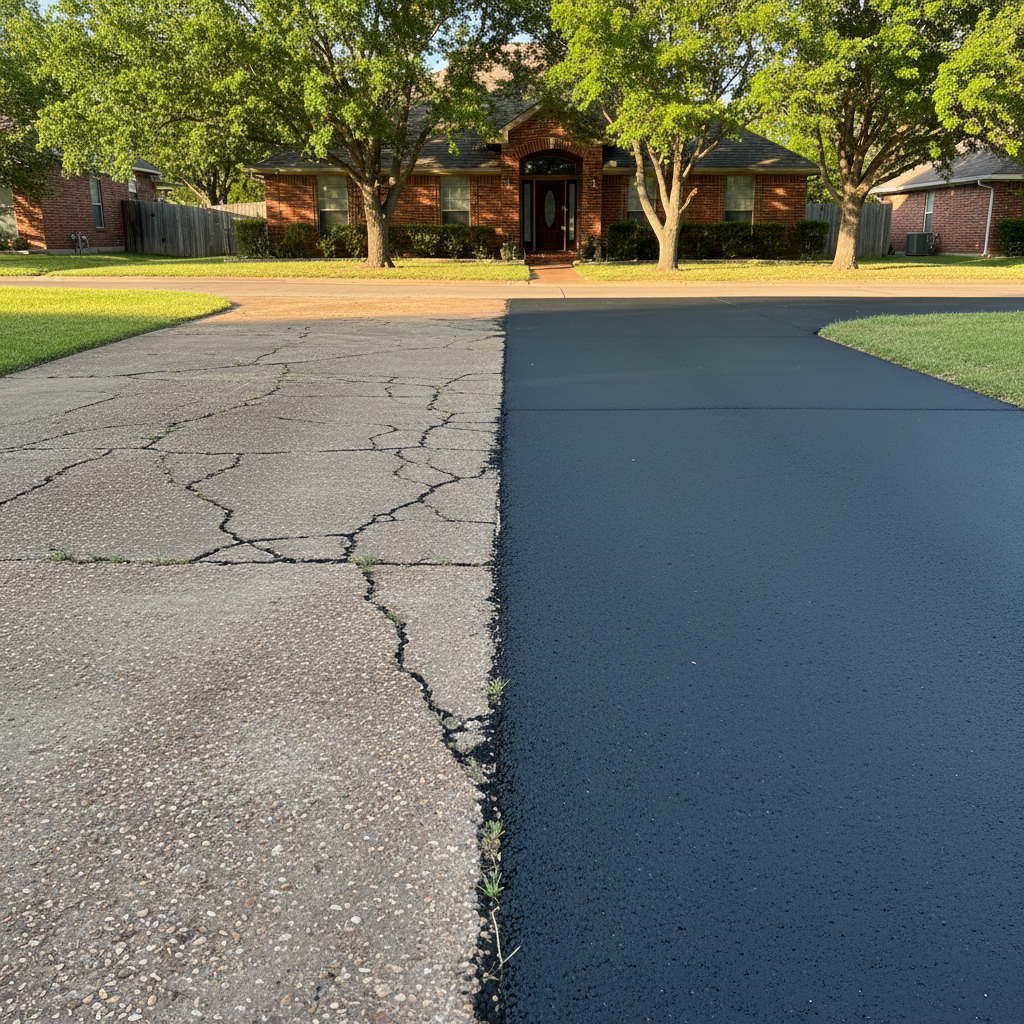
So, you’re thinking about a new driveway, huh? Or maybe you’re finally replacing that cracked-up mess that’s been an eyesore since you moved in. Good for you. It’s a big investment, no doubt, and you want to get it right. Around here in New Deal, folks usually go with one of two things: asphalt or concrete. Both have their good points and their not-so-good points, and what works best for your neighbor might not be the right fit for you. Let’s talk about what I’ve seen over the years and help you figure out which one makes the most sense for your home.
The Scoop on Asphalt Driveways
Asphalt, sometimes called blacktop, is what we at Ace Asphalt Solutions really know. It’s a mix of aggregate (think sand and gravel) and a binder, which is that black, sticky petroleum stuff. When we lay it down, it’s hot, and we roll it to compact it. Once it cools, it’s a solid surface. Pretty straightforward.
Cost
Right off the bat, asphalt is usually cheaper to install than concrete. You’re looking at less per square foot, which can make a big difference on a long driveway, especially if you’ve got a bigger property out towards the county line. It’s a solid option if you’re on a tighter budget but still want a quality, durable surface.
Durability & Texas Conditions
This is where asphalt really shines in our neck of the woods. It’s flexible. What does that mean for you? Well, remember those crazy temperature swings we get? From freezing nights in winter to scorching 100-degree days in summer, our ground expands and contracts. Concrete is rigid, so it tends to crack under that kind of stress. Asphalt, being more pliable, handles those shifts better. It’s less likely to crack from ground movement or heavy loads. It also holds up well to the heavy rains we get sometimes, shedding water effectively.
Maintenance
Asphalt does need a bit more love than concrete over its lifespan, but it’s usually simpler maintenance. You’ll want to sealcoat it every 2-5 years. This protects it from UV rays, water, and oil spills. It also keeps it looking fresh and black. Small cracks can be filled pretty easily, and if you get a pothole, we can patch it up without replacing the whole thing. It’s a proactive approach that keeps your driveway in good shape for decades.
Appearance
You get that classic, smooth, dark black finish with asphalt. It can look really sharp, especially against a green lawn or a light-colored brick house. It’s a clean, uniform look that many people prefer.
Digging into Concrete Driveways
Concrete is a mix of cement, water, and aggregates. We pour it as a liquid, and then it cures, or hardens, over several days or weeks. It’s a very common choice too, and for good reason.
Cost
Generally, concrete costs more upfront than asphalt. The materials are often pricier, and the installation can be more labor-intensive, especially if you’re looking for decorative finishes. If budget is your absolute top priority, concrete might push you a bit higher.
Durability & Texas Conditions
Concrete is incredibly strong and rigid. It can handle heavy loads without a problem. However, that rigidity can be its downfall in our climate. Those temperature fluctuations and the expansive clay soils we have around New Deal? They can make concrete crack. Once it cracks, it’s harder and more expensive to repair properly. You often end up with unsightly patches or needing to replace whole sections. It’s tough, but it’s not as forgiving as asphalt when the ground decides to move.
Maintenance
Concrete is often touted as